The Best AI Agent Frameworks for Startups: Build Fast Without Burning Cash
The Best AI Agent Frameworks for Startups: Build Fast Without Burning Cash
1. The Startup Race: Shifting From Chatbots to Autonomous Agents
Let me tell you what investors are looking for in 2026. Simple AI chatbots that just answer questions? Everyone has those. They do not impress anyone anymore.
What startups need to build now are Autonomous AI Agents. These are smart software loops that can actively search databases, write code files, update CRMs, and fix problems entirely on their own — without a human watching over them every second.
The classic founder's trap: Trying to build an AI agent system completely from scratch. I have seen teams burn 3 to 6 months coding their own agent framework. By the time they launch, the market has moved on. Their seed funding is half gone. And their software is still buggy.
The smarter path: Using pre-built open-source framework libraries. These tools let you launch features in days, not months.
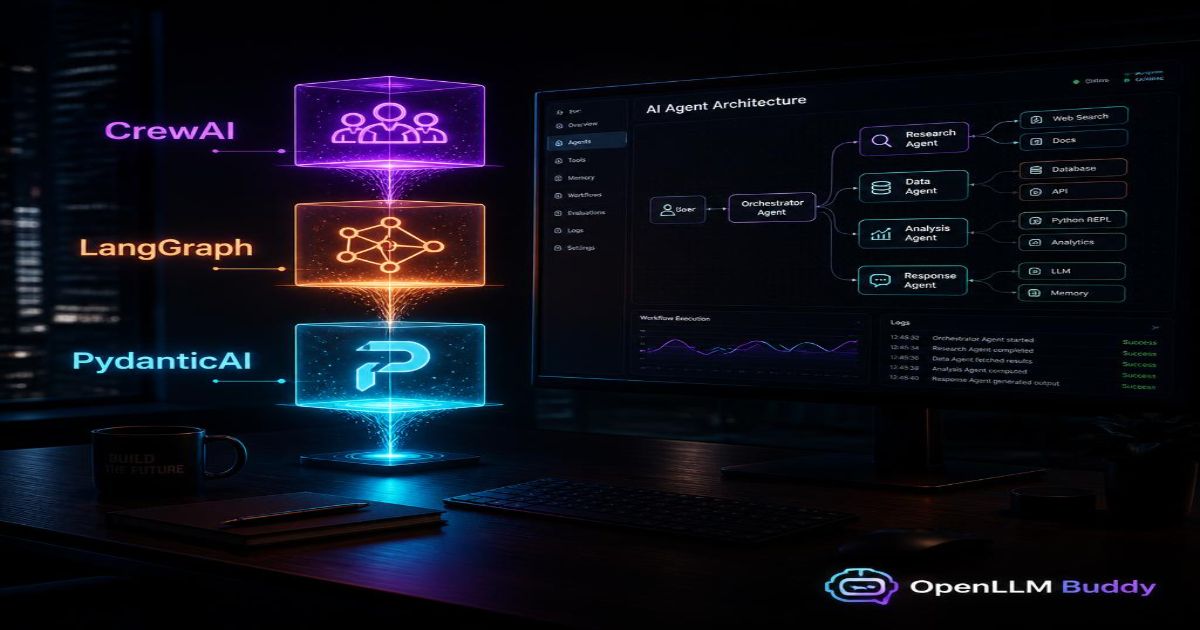
Here are the three best agent frameworks for startups in 2026. Pick the right one by Friday.
Simple Definition - Multi-Agent Orchestration: This is just like running a small business team. Instead of asking one lone worker to do everything, you create a researcher agent, a writer agent, and a manager agent, and let them pass files to each other until the project is done. No single person does all the work. Same for AI agents.
2. The Top 3 Startup Agent Frameworks
CrewAI (Best for Fast Prototypes & Role-Playing)
CrewAI uses a human-like organizational metaphor. You define independent agents with specific roles, goals, and backstories. Think "AI Marketer" and "AI Editor" working together.
How it works in plain English: You tell CrewAI, "I want a researcher agent, a writer agent, and a proofreader agent." You give each one a goal. Then you let them talk to each other. The researcher finds information. The writer turns it into a blog post. The proofreader checks for errors. All automatically.
The Startup Win: CrewAI is incredibly fast to write and understand. A junior developer can get a working multi-agent demo running in a single afternoon. No PhD required.
Best for:
- Content creation loops (blog posts, social media, email sequences)
- Market research automation
- Basic sales outreach flows
- Internal demos for investors
The trade-off: CrewAI gives you less control over exactly what each agent does. For simple tasks, that is fine. For complex, high-stakes workflows, you might want more precision.
LangGraph (Best for Complex Production Control)
LangGraph is a graph-based framework. You explicitly map out nodes (steps) and edges (connections). Think of it like drawing a flowchart for your AI.
How it works: You tell LangGraph exactly what steps to follow. Step 1: Check the database. Step 2: If data found, analyze it. Step 3: If data not found, search the web. Step 4: Write a response. Step 5: Save the result. The AI cannot skip steps or make up its own path.
Simple Definition - State Machine: A state machine simply means the AI follows a strict company rulebook. If step A fails, the rulebook explicitly forces the AI to go to step B instead of hallucinating a random answer. This is critical for banking, healthcare, or legal applications.
The Startup Win: LangGraph gives you absolute, deterministic control. If your app handles sensitive customer data, banking actions, or medical records where the AI cannot be allowed to make unexpected mistakes, LangGraph is the production standard.
Best for:
- Financial transactions and payment processing
- Multi-step customer support bots with compliance rules
- Healthcare or legal document workflows
- Any feature where mistakes could cost you real money or legal trouble
The trade-off: LangGraph takes longer to set up (usually a few days instead of a few hours). You trade speed for control.
PydanticAI (Best for Clean Code & Type-Safe Data)
PydanticAI is a rising favorite for software engineers who hate hidden framework "magic." It forces the AI to output perfect data layouts that match your database exactly.
How it works: You define a data schema — a template for the AI's answers. For example, {"customer_name": "text", "order_id": "number", "refund_amount": "number"}. The AI must fill out this template perfectly. If it tries to add extra fields or use the wrong data type, the framework rejects the answer.
The Startup Win: PydanticAI prevents application crashes. When your AI sends data to your database, you know it will match the expected format. No more "KeyError: 'customer_name'" bugs at 2 AM.
Best for:
- Internal SaaS automations
- Database update workflows
- Data extraction from emails, receipts, or documents
- Teams that prioritize clean, safe, testable code
The trade-off: PydanticAI is less famous than CrewAI or LangGraph. The community is smaller, so you will find fewer tutorials and YouTube videos.
3. The Startup Stack Scorecard: Choosing Your Tool
Here is a quick reference table for busy founders:
| AI Agent Framework | Time to Launch an MVP | Level of Control Over AI | Best Product Use Case | Startup Verdict |
|---|---|---|---|---|
| CrewAI | Extremely Fast (Hours) | Moderate | Content loops, research, basic sales flows | Best for finding product-market fit fast |
| LangGraph | Slower (Days) | Maximum / Absolute | Financial transactions, multi-step customer bots | Best for mission-critical, audited features |
| PydanticAI | Fast (Days) | High (Data Focus) | Internal SaaS automations, database updates | Best for teams prioritizing clean, safe code |
My Honest Advice for Founders
- Week 1 of your startup: Use CrewAI. Get something working fast. Show investors a demo. Find out if your idea has traction.
- After product-market fit: Consider migrating to LangGraph for customer-facing features that cannot afford mistakes.
- For internal tools: PydanticAI is often the simplest, cleanest choice.
4. The Loop Trap: How Advanced Agents Drain Startup Cash
Now for the warning that most founders learn the hard way.
When an AI agent runs an autonomous loop to solve a complex bug or clean up a data list, it must read the entire chat history, directory paths, and software states over and over again on every single loop turn.
Simple Definition - Recursive Loop Expenses: Imagine hiring a virtual assistant to clean up a messy spreadsheet. But every time they fix one cell, they ask you to re-send the whole spreadsheet again. And you pay them for every single word of that re-sent file. That is how agent loops work with per-token pricing.
The API Bill Explosion
If you connect your new agent to standard premium cloud API providers (like OpenAI or Anthropic), they charge you a variable fee for every single word (token) read or written.
Here is what happens when an agent gets stuck in a loop:
- A simple debugging task that should cost $0.05
- The agent loops 50 times, re-reading the same code files each time
- Final bill: $2.50 for one bug fix
Now multiply that by 100 bug fixes per day. Then multiply by 30 days. Your $75 expected bill becomes $7,500. I have seen this happen to three different startup founders this year.
Critical Warning: A single agent getting stuck in a logical loop for an hour can instantly drain hundreds of dollars from your company credit card. Always set maximum loop limits in your framework configuration.
The Local Laptop Freeze
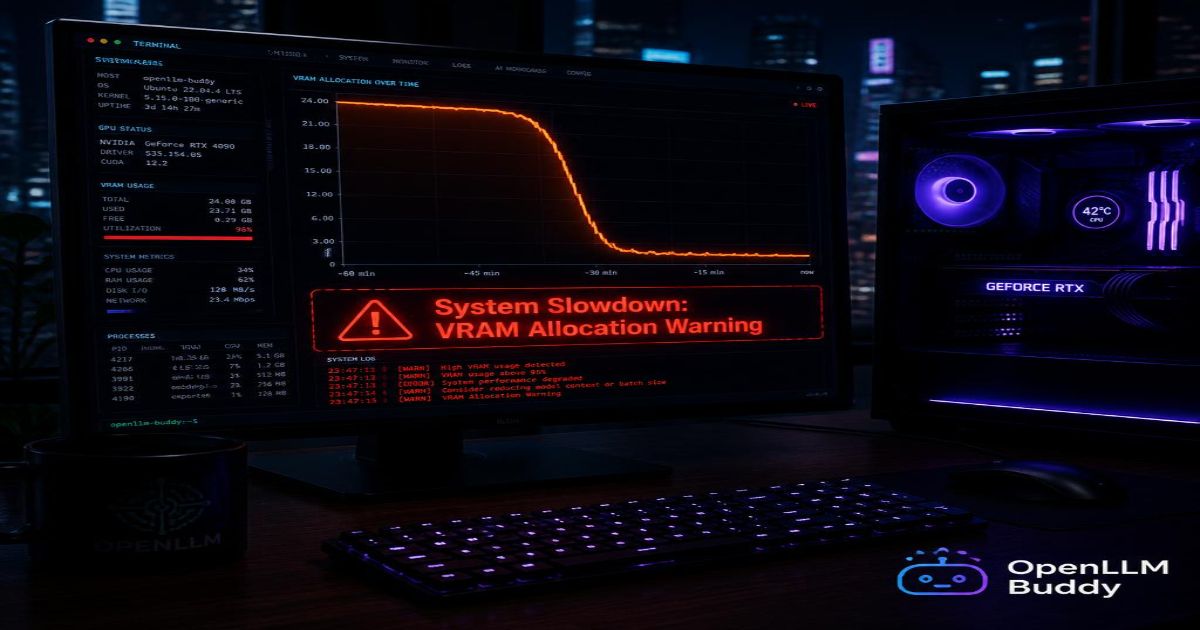
So you decide to escape the token bill. You try to run heavy open-source models like Qwen 3.6 27B locally on your development laptop.
Here is what happens:
- Your laptop fans spin up to maximum (loud enough to annoy your co-founder)
- The battery drains from 100% to 20% in under an hour
- The computer gets hot enough to burn your legs
- After 30 minutes of agent loops, the system crashes with an "Out of Memory" error
You saved $0 in token fees. But you lost 2 hours of productive work. And you still do not have a working agent.
5. Scale Without Fear: Zero-Token Hosting with OpenLLM Buddy
This is where OpenLLM Buddy becomes your startup's secret weapon.
We let you build advanced loops using any open-source framework (CrewAI, LangGraph, or PydanticAI) without ever tracking word counts or token invoices again.
What We Do
We host uncompressed, top-tier open weights for you on elite cloud graphics card clusters. Our infrastructure includes:
- Premium NVIDIA RTX 4090 and next-gen RTX 5090 systems
- Powered by fast RunPod servers
- Enterprise-grade security and 99.9% uptime
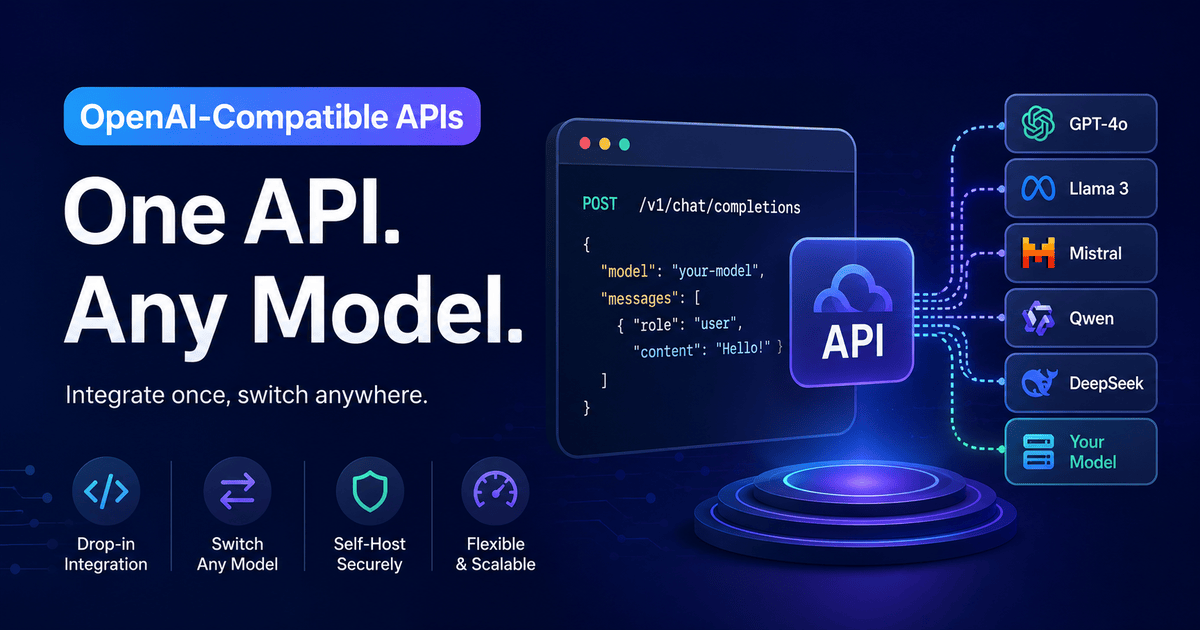
- An instant, secure, OpenAI-compatible API link
You never buy a $2,000 graphics card. You never configure Linux servers. You never download model files.
Our Disruptive Startup Value Proposition
We completely eliminate messy, variable per-token bills. We only charge your company a tiny, predictable flat rate of $0.50 per hour for the raw minutes our cloud hardware is actively spinning. All your input tokens, output tokens, and infinite background agent validation loops are 100% FREE.
| Cost Factor | Traditional API (OpenAI) | Local Laptop | OpenLLM Buddy |
|---|---|---|---|
| Agent loop token fees | $0.05–0.50 per loop | $0 (but laptop crashes) | $0 |
| Upfront hardware cost | $0 | $1,600+ | $0 |
| Setup time | 5 minutes | 2-4 hours | 5 minutes |
| Hourly runtime cost | Varies (per token) | Electricity ($0.10/hr) | $0.50/hr |
| Works with CrewAI/LangGraph/PydanticAI | ✅ | ✅ | ✅ |
Connect Your Agent Framework in Seconds
Here is how easy it is to point your startup's agent framework to OpenLLM Buddy:
import openai

# Connecting your startup's custom agent framework to a flat-rate compute cloud
client = openai.OpenAI(
    base_url="https://api.openllmbuddy.cloud/v1",
    api_key="YOUR_OPENLLM_BUDDY_KEY"
)

# Now use this client with CrewAI, LangGraph, or PydanticAI
# Your agent loops can run 100, 1,000, or 10,000 times.
# Token fees stay at ZERO. You only pay for raw GPU time.
The Ultimate Business Advantage
With OpenLLM Buddy, you can:
- Run recursive automation scripts all night long — your agents keep working while you sleep
- Scale your features to thousands of live beta testers — no surprise token bills when usage spikes
- Test creative ideas freely — experiment with different prompts, workflows, and models without watching a meter
- Preserve your startup runway — infrastructure costs stay flat and predictable, so you can focus 100% on building a product users love
The Bottom Line
You have three great framework choices:
- CrewAI for speed and prototyping
- LangGraph for absolute control
- PydanticAI for clean, type-safe code
But no matter which framework you pick, do not let token fees kill your runway. Do not let local laptop crashes kill your productivity.
Run your agents on OpenLLM Buddy. Flat-rate compute at $0.50/hour. Tokens 100% free.
Sign up for OpenLLM Buddy and launch your first token-free agent cluster today
Go build something that matters.